Urinary Tract Infection (UTI): Testing & In-Person Care
A urinary tract infection (UTI) affects the urinary system, most commonly the bladder. Infections can also involve the urethra or kidneys.
UTIs are common, and most uncomplicated infections can be treated successfully. Testing helps identify the cause and guide appropriate treatment.
Book an In-Person AppointmentCould You Have a UTI?
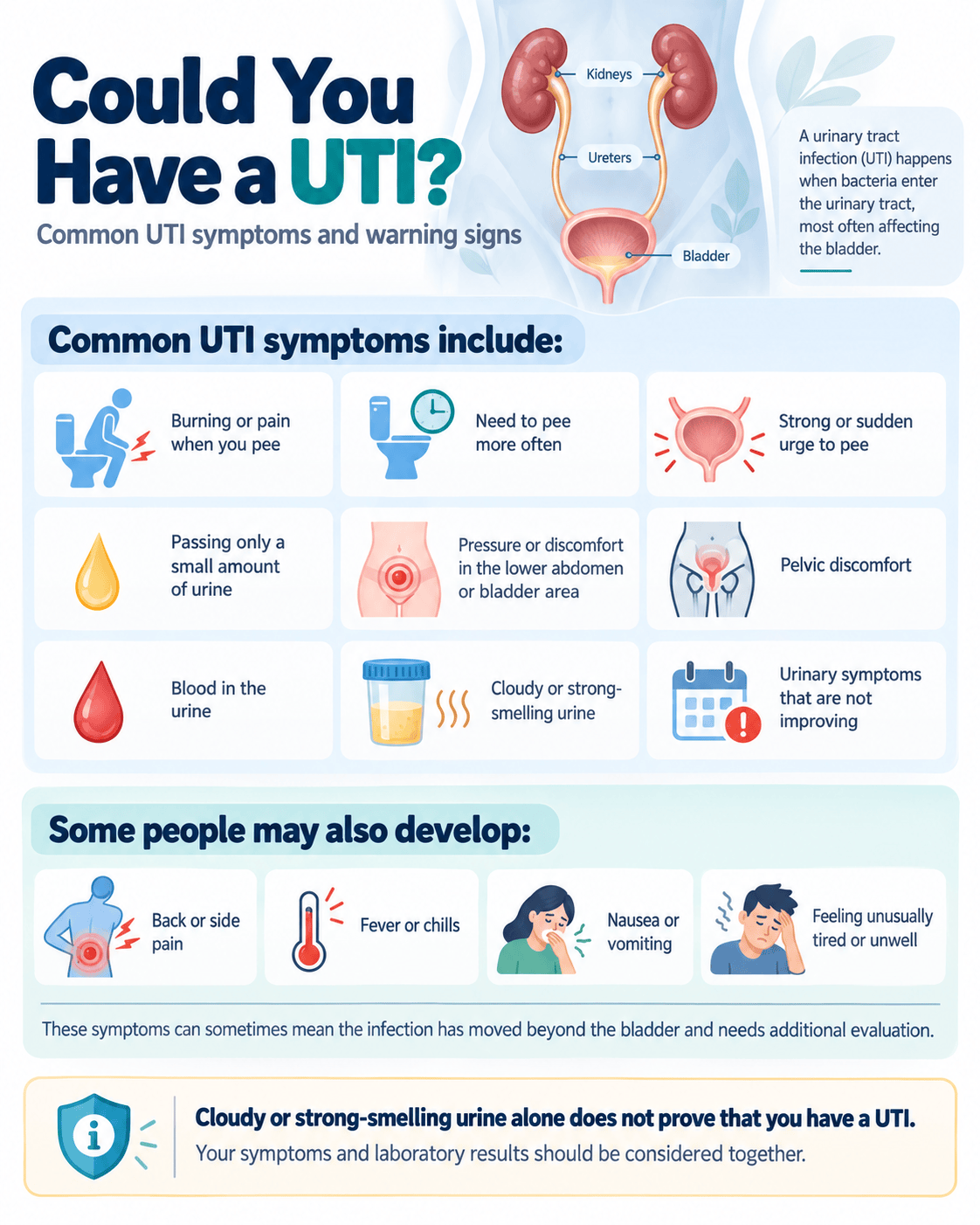
Common symptoms include:
- Burning during urination
- Frequent urination
- Sudden urinary urgency
- Lower abdominal discomfort
- Cloudy urine
- Blood in urine
Why Testing Matters
Urinary symptoms can overlap with other medical conditions. Testing helps:
- Identify signs of urinary inflammation
- Detect urinary pathogens
- Support an accurate diagnosis
- Guide treatment decisions
- Avoid unnecessary antibiotics
An untreated bladder infection can sometimes spread to the kidneys, requiring more intensive medical care.
How Is a UTI Tested?
Testing may include urinalysis, urine culture, and rapid molecular PCR testing.
Urinalysis
Evaluates urine for findings that may support infection:
- White blood cells
- Leukocyte esterase
- Nitrites
- Blood
- Other urine abnormalities
Urine Culture & Sensitivity
Detects and identifies bacteria growing in urine.
Antibiotic susceptibility testing helps guide antibiotic selection when clinically indicated and an appropriate isolate is recovered.
Rapid UTI PCR – Core Panel
Molecular detection of:
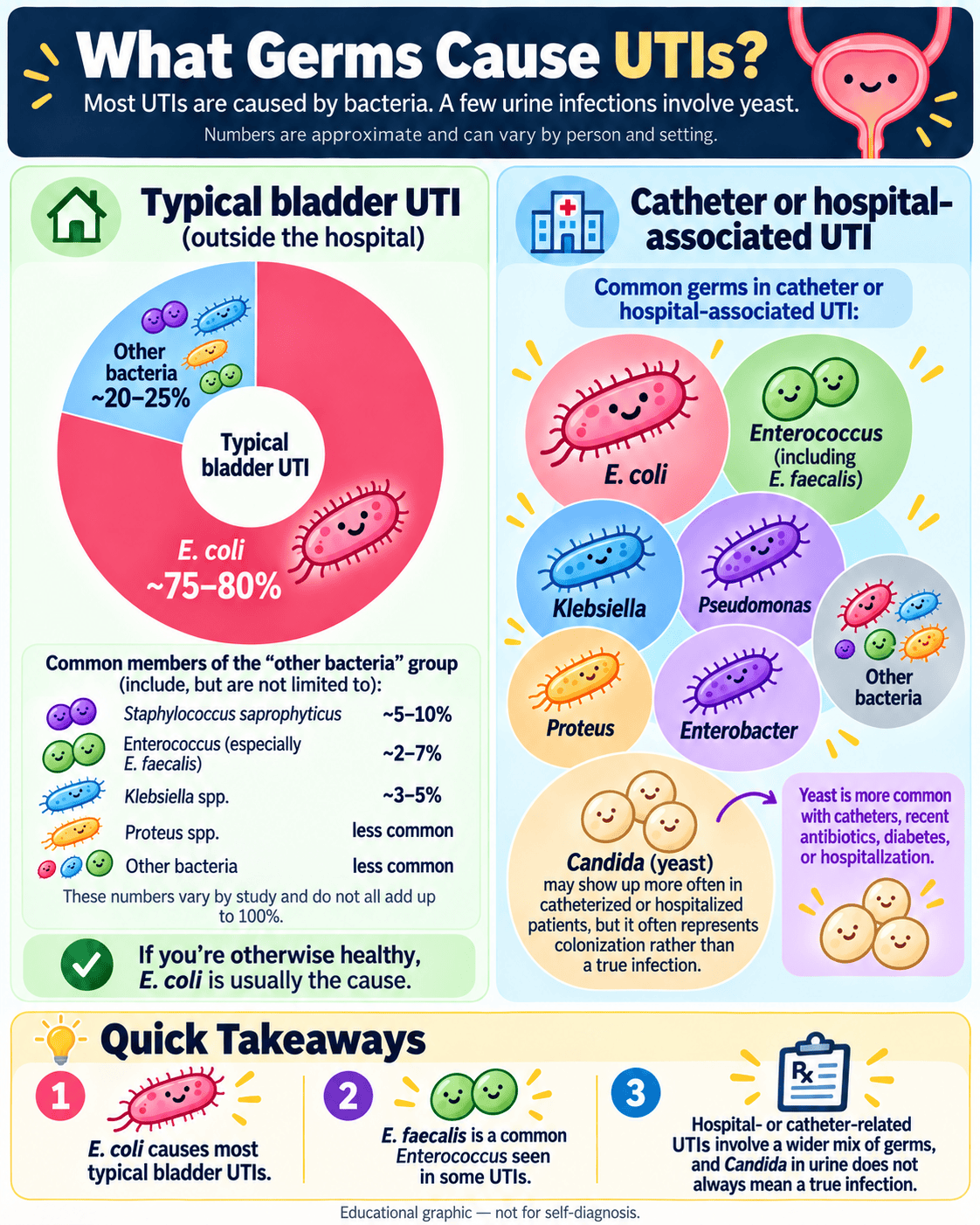
- Escherichia coli (E. coli)
- Enterococcus faecalis (E. faecalis)
Semi-quantitative: Reports estimated bacterial load as CFU-equivalent/mL.
Culture vs. PCR
PCR detects selected bacterial DNA targets. Culture can recover viable bacteria and allow antibiotic susceptibility testing.
The tests provide complementary information when used appropriately.
CFU-equivalent/mL represents an estimated PCR-derived bacterial load, not a direct viable bacterial colony count.
UTI Testing & Treatment Prices
Affordable self-pay options. Walk-ins welcome — no appointment necessary for laboratory testing.
Core Panel $99
Semi-quantitative bacterial load (CFU-equivalent/mL).
Diagnostic Bundle $129
The $129 package includes laboratory testing only. Clinical evaluation and medications are separate. Antibiotic susceptibility testing is performed when indicated and an appropriate bacterial isolate is recovered. PCR itself does not determine antibiotic susceptibility.
Eligible insurance plans may also be accepted. Review Insurance & Payment Information
How Do I Collect a Urine Sample?
UTI testing generally uses a clean-catch midstream specimen. Follow the laboratory's collection instructions.
Proper collection reduces contamination and improves result reliability.
Burning When You Pee Is Not Always a UTI
Similar symptoms can result from other urinary, genital, or sexually transmitted infections, including:
- Chlamydia
- Gonorrhea
- Trichomonas
- Mycoplasma genitalium
- Urethritis
- Vaginal infections
- Other urinary or genital conditions
UTI Evaluation & In-Person Treatment
ALC Diagnostics provides laboratory testing and in-person clinical care. During a visit with Dr. Syed Haque, your provider can:
- Review urinary symptoms
- Review laboratory results
- Review medical history and allergies
- Evaluate for uncomplicated UTI
- Recommend appropriate treatment
- Discuss follow-up or referral
Prescription treatment is available for eligible uncomplicated UTIs when medically appropriate.
Book an In-Person AppointmentWhat Is an Uncomplicated UTI?
An uncomplicated UTI generally involves the lower urinary tract or bladder in an otherwise healthy, nonpregnant adult without relevant urinary tract abnormalities. Many cases can be managed outside the hospital.
Fever, chills, back or side pain, nausea or vomiting may indicate kidney involvement or another condition that requires prompt medical evaluation.
When Should You Go to the Emergency Room?
Seek emergency medical care or call 911 when appropriate for:
- Fainting, confusion or difficulty staying awake
- Difficulty breathing
- Severe weakness or serious illness
- Severe or worsening abdominal, back or flank pain
- Persistent vomiting or inability to keep fluids down
- Sudden inability to urinate
- Heavy bleeding in urine or clots with urinary difficulty
- High fever with shaking chills and severe illness
- Facial or throat swelling or severe allergic reaction
- Any immediately life-threatening symptom
Do not wait for test results or a clinic appointment if you may be experiencing a medical emergency.